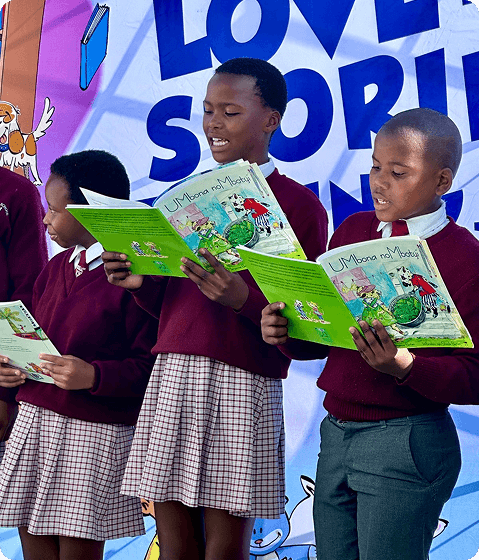
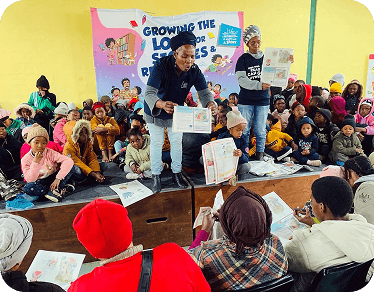
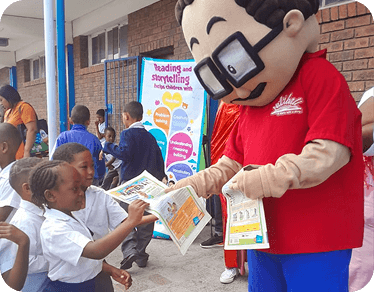
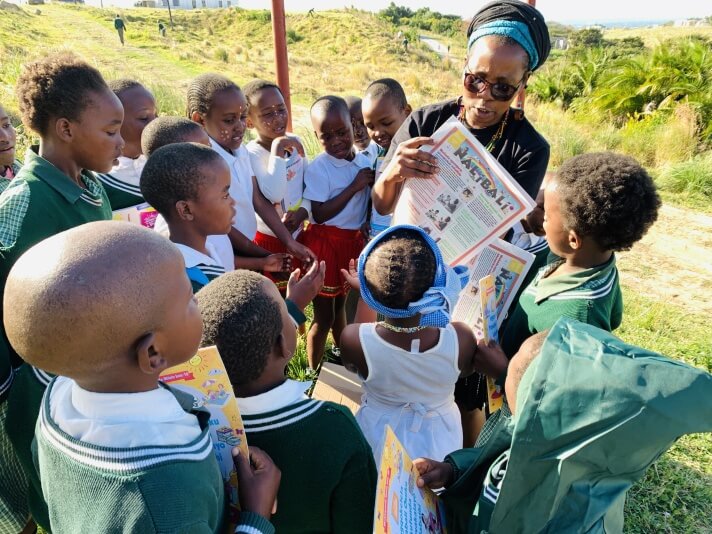
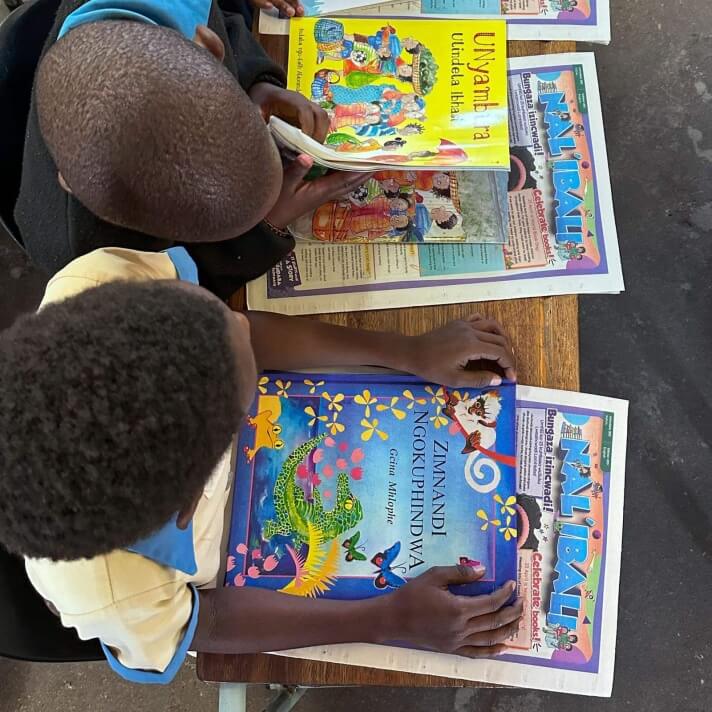
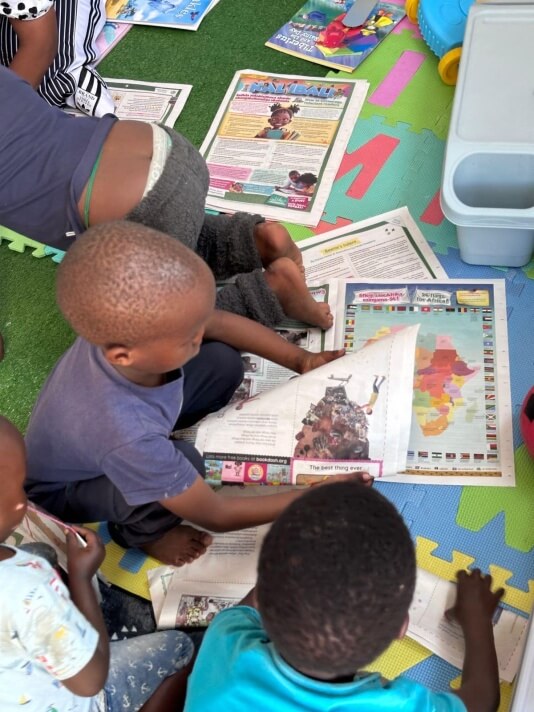
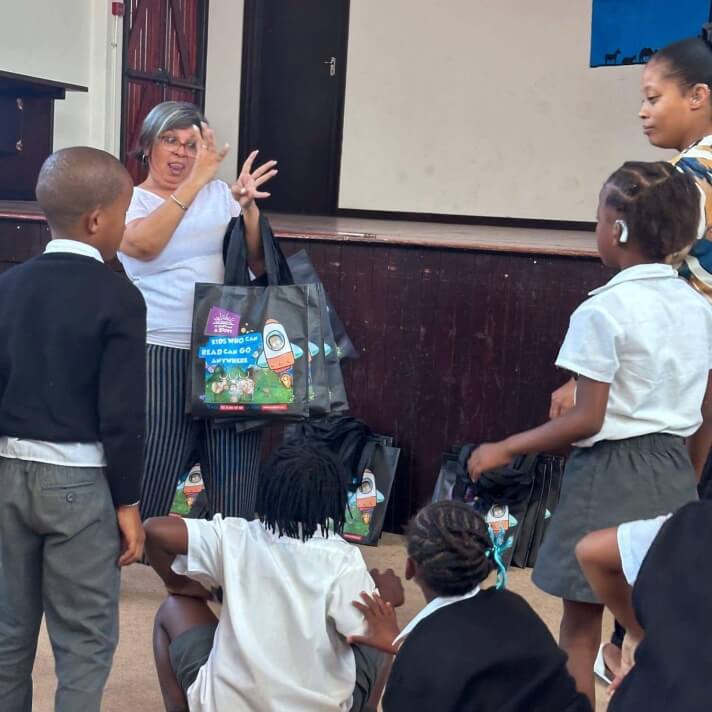
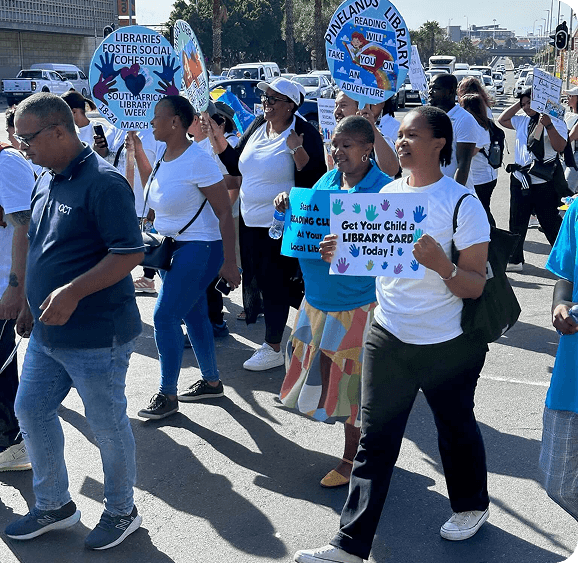
At Nal’ibali, we promote literacy through research, campaigns, programmes and special projects. Each initiative helps spark a love of reading and empowers communities across South Africa.
Theory of Change
Storybook reading and storytelling benefit children both cognitively and emotionally. Cognitively, storybook reading and storytelling make a critical contribution to developing literacy through building vocabulary and reading for meaning (Hart & Risley, 2003). A robust vocabulary improves all areas of communication — listening, speaking, reading and writing.
Vocabulary growth is directly related to school achievement even in subjects not based on written text
The size of a child’s vocabulary at the start of school predicts the ability to learn to read
Vocabulary helps children to think, problem solve and learn about the world
Expanding a child’s knowledge of words provides unlimited access to new information (JCFS Chicago, Hart & Risley, 2003)
Children in low-income families or with uneducated parents, but in a home with more than 25 books, are more likely to gain two more years of schooling than children in homes with no books. (Evans, Kelly, Sikora & Treiman, 2010). Children in homes where there are books and adults who listen to them and tell or create stories with them, are more likely to become readers. A home with a rich literacy culture does not require adults to be literate.
Emotionally, storybook reading and storytelling in a safe, familial environment promotes family cohesion and intimacy, which boosts children’s self-esteem and contributing to them becoming confident students (Hoyne & Egan, 2019). Deep discussion of the texts and expressing emotional reactions to the turns of the story, develops children’s empathy and ability to self-regulate (Aram & Shapira, 2012). Story books expose children to social situations, introducing moral dilemmas, relationships, conflicts and problem solving (Fine, Aram & Ziv, 2011). Social-emotional skills development at an early age predict positive adult outcomes include good mental health, a low chance of substance abuse and a higher chance of employment. (Mahasneh, Raomanowki & Dajani, 2017).
To change behaviour around reading, the benefits must be understood and valued. Nal’ibali’s programme work caters for various settings and audiences, applying specific interventions with different outcomes. Implemented face-to-face or online, there’s a programme to suit your needs.
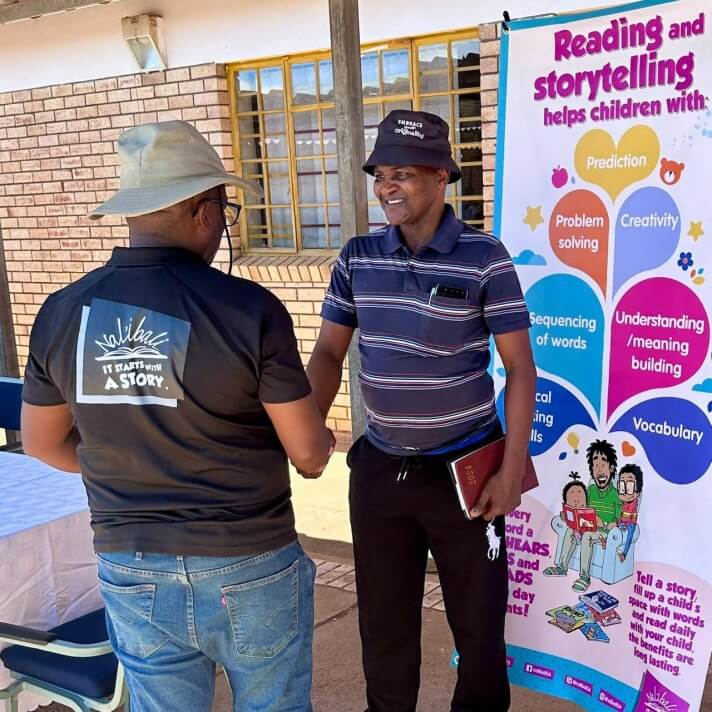
The Nal’ibali Men’s Literacy Imbizo aims to upskill men in the literacy space and create a network of men who are interested in building a culture of reading for enjoyment in their communities.
The National Reading Survey was commissioned and managed by the Nal’ibali Trust in partnership with the National Library of South Africa and with support from the Zenex Foundation, DGMT and the National Education Collaboration Trust. The National Reading Barometer maps the health of the South African reading ecosystem using National Reading Survey findings and published
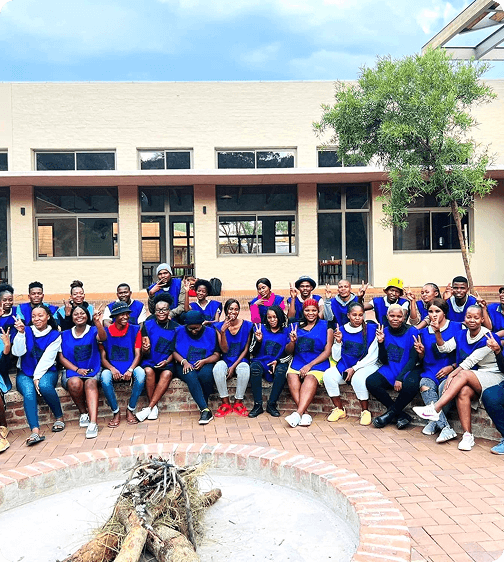
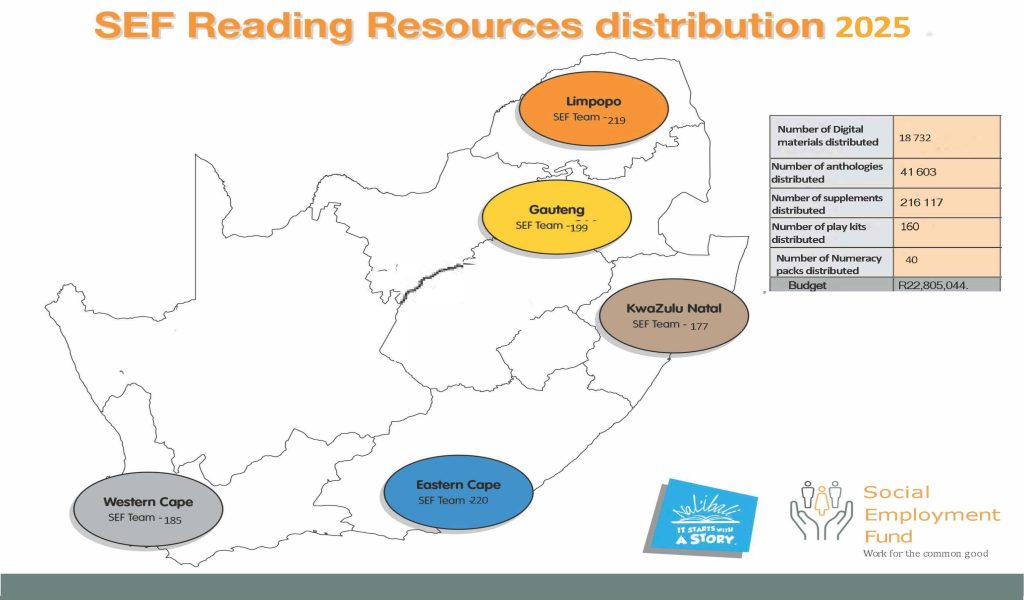
The Nal’ibali SEF (Social Employment Fund) Project provides meaningful, community-based work opportunities that promote literacy development across South Africa. Through this initiative, we empower literacy champions to support reading, storytelling and learning in homes, schools and community spaces — helping to build a stronger culture of reading, while creating lasting social impact.
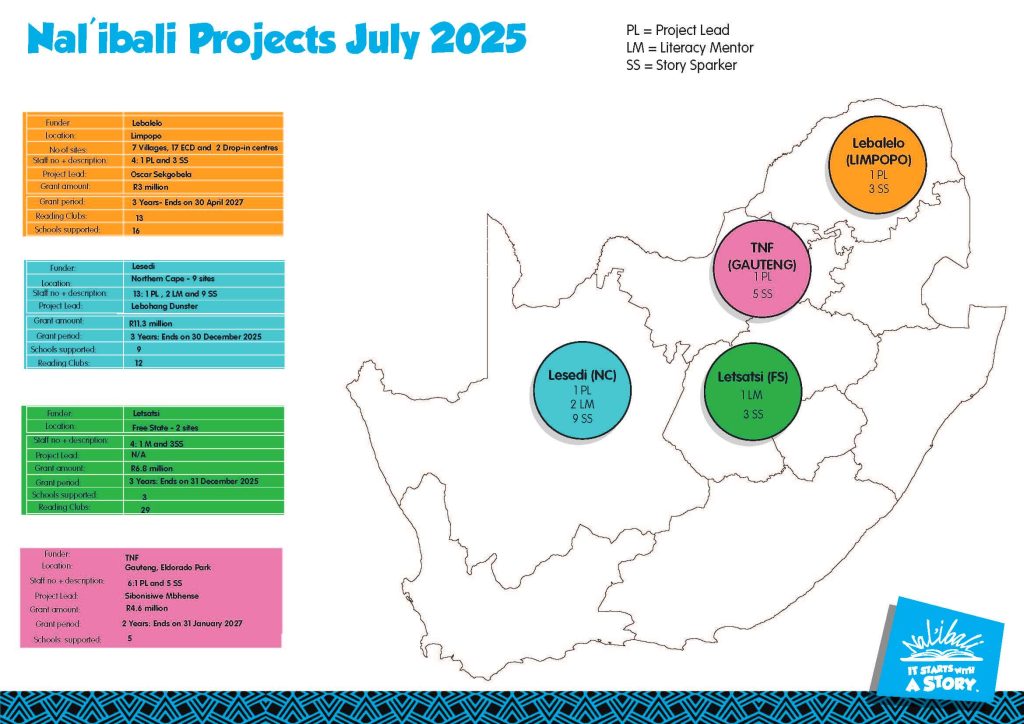
In addition to core programmes across South Africa, Nal’ibali partners with various funders and organisations to spread the love of reading for enjoyment.
What could possibly happen when a starving cow is left alone with three fluffy little chicks? And what would happen when the cow comes home and finds a big pile of hay? What if she ate and ate and ate …