Education and employment, it starts with a story
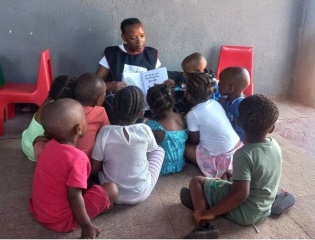
The beautiful thing about learning is that no-one can take it away.
Unemployment and lack of education – especially literacy – are two key concerns in South Africa. The official unemployment rate was 31,9% in the third quarter of last year. In addition, the 2030 Reading Panel Report found that most children leave Grade 1, without knowing the alphabet and 82% of Grade 4 learners…
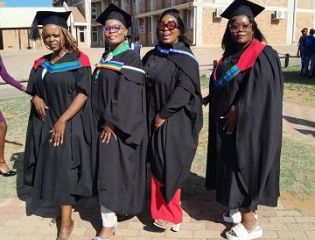
Nal’ibali Limpopo SEF team graduates
Nal’ibali began working as a Strategic Implementation partner of the Social Employment Fund, a project started by the Industrial Development Corporation (IDC), to combat the high unemployment and low literacy rates in South Africa in August 2022. According to Stats SA, the unemployment rate in South Africa is currently sitting at 32.9%, a 0.2% increase from the fourth quarter of 2022.
To increase employment in the…
Celebrating collaboration in the literacy sector: Yizani Sifunde
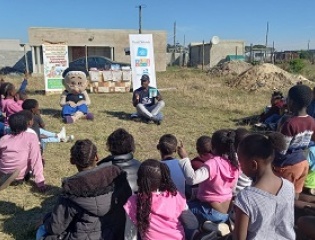
In East London, a group of children are giggling their way through an isiXhosa book, being read to them by their ECD teacher. In Queenstown, a “story sparker” is listening to a young boy retelling a story that he had been read, in his own words. These children and adults have all been part of the Yizani Sifunde (Come, let’s read) project – a…
Nal’ibali officially launches in the North West
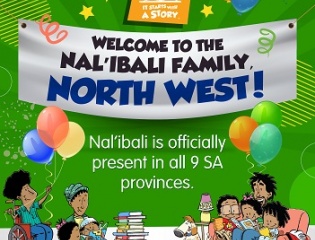
Nal’ibali is officially present in all 9 South African provinces. This comes after our Nal’ibali North West Launch at Moretele.
The North West province is an exciting addition to furthering Nal’ibali’s vision of encouraging children to have positive experiences with stories and reading books in South Africa. In collaboration with the National Education Collaboration Trust, the Department of Basic Education in the North West Province, and…
Nal’ibali’s new Theory of Change
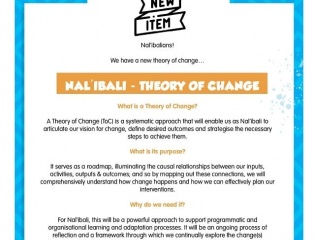
NAL’IBALI IGNITES A LOVE OF BOOKS AND STORIES IN CHILDREN
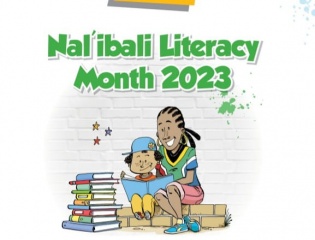
This year marks the release of Nal’ibali Children’s Anthology Storybook, which is a collection of 20 original short stories that are suitable for children from the ages of 0 – 7 years. The anthology features an exciting array of beautifully illustrated South African stories with subjects are aimed at igniting a love of books and stories in children across South Africa. Nal’ibali Literacy Month…
NAL’IBALI AND OLD MUTUAL CELEBRATE NELSON MANDELA MONTH BY GIVING OUT BOOKS AND SCHOOL SHOES TO UNDERSERVED COMMUNITIES
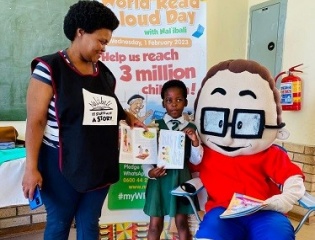
In partnership with Old Mutual, Nal’ibali aims to use this year’s Mandela Day’s 67 minutes to reach a combined number of 670 learners from selected schools across Kwa-Zulu Natal, Eastern Cape, Free State, Northern Cape and Gauteng provinces. The schools selected for this year’s Mandela Day initiative were chosen based on need, with many lacking essential learning materials like books, flashcards and reading charts….
Nal’ibali and the Trevor Noah Foundation collaborate on a literacy competition
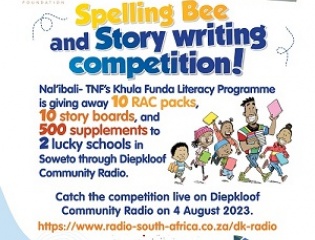
Considering the recent PIRLS (Progress in International Reading Literacy Study) 2021 report that revealed that 81% of SA Grade 4 learners cannot read for meaning, Nal’ibali and TNF’s Khula Funda Literacy programme has created a spelling bee and story writing competition to spread love for learning and build a reading culture amongst primary school children in Soweto, Gauteng. The Nal’ibali – TNF Khula Funda…
South Africans are readers, but face a number of barriers
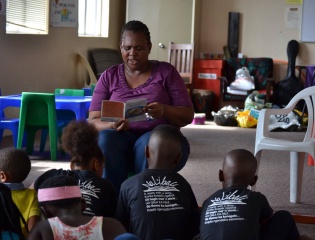
The recent launch of the 2022 National Reading Survey and Barometer comes at a time when South Africans concerned with the poor literacy levels of children in our country could use some encouraging news.
The findings of the most recent Progress in International Reading Literacy Study (Pirls) on South Africa have been widely lamented, as they indicate just how far we are from our national goal of all…
SOUTH AFRICANS READ MORE THAN WE THINK – BUT STILL DO NOT HAVE ENOUGH BOOKS
A new national survey reveals that South Africans read more than we think and 83% of South Africans read in some way, whether for pleasure, to learn new things or to communicate with others, and 32% read books regularly.
However, they still face significant challenges accessing reading material, especially in African languages, and most children are growing up without any children’s books at home.
This is…